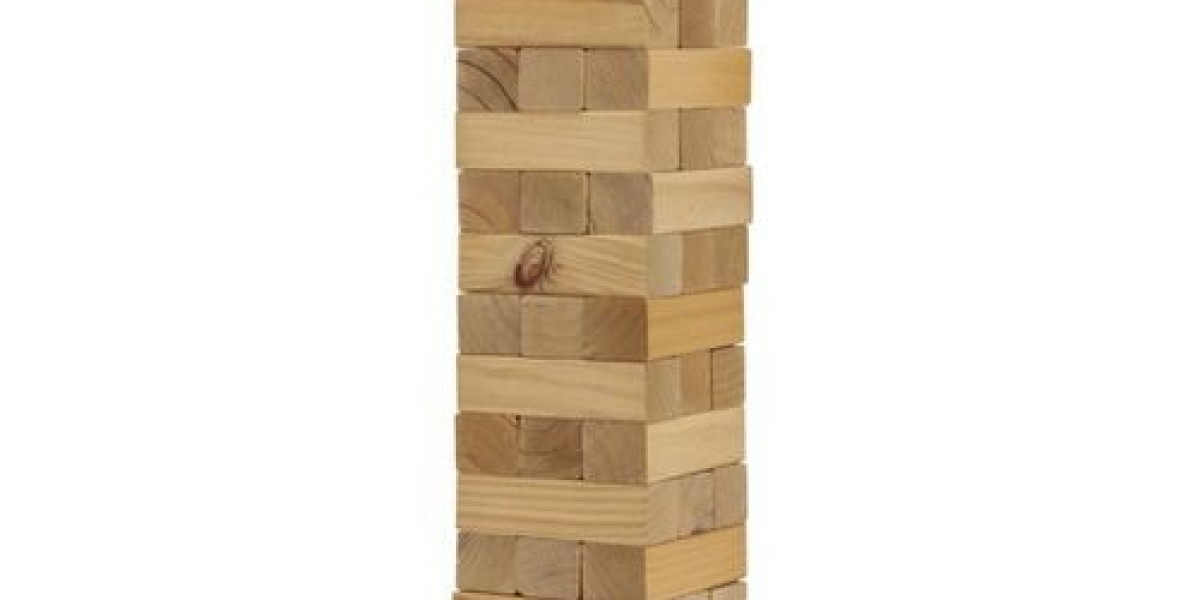

Introduction to Early Learning and Play
Early childhood is a critical period for developing cognitive, motor, and social skills. Play-based learning provides a natural and engaging way for children to explore the world, experiment with new ideas, and build essential skills. Among the many educational toys available, Wooden Tower Blocks stand out as a versatile tool that combines fun with foundational learning. These blocks offer hands-on experiences that stimulate young minds, encouraging both creativity and structured thinking from an early age.
Enhancing Fine Motor Skills
One of the most immediate benefits of Wooden Tower Blocks is the development of fine motor skills. Handling blocks, stacking them carefully, and balancing structures requires precise hand movements and coordination. This practice strengthens finger dexterity and hand-eye coordination, which are essential for later skills such as writing, drawing, and manipulating small objects. Toddlers learn to grasp, place, and adjust blocks, creating a foundation for overall physical control and confidence in movement.
Fostering Cognitive Development
Wooden Tower Blocks also provide a platform for cognitive growth. As children build towers, they begin to understand concepts like balance, symmetry, and cause-and-effect relationships. Experimenting with different block arrangements teaches problem-solving, critical thinking, and spatial awareness. For example, if a tower falls, children must analyze why it happened and adjust their strategy, promoting logical reasoning and resilience. These cognitive exercises are vital for early learning and prepare children for more structured academic tasks.
Encouraging Creativity and Imagination
Beyond motor and cognitive skills, Wooden Tower Blocks spark creativity and imaginative play. Children are not limited to building towers; they can create bridges, castles, or entire cities. This open-ended play encourages storytelling, role-playing, and experimentation with shapes and structures. By exploring endless possibilities, children develop divergent thinking skills, learning that there are multiple solutions to a single problem—a key aspect of creativity.
Supporting Social Skills Through Group Play
Playing with Wooden Tower Blocks can also promote social development. When children collaborate on building projects, they learn to share, negotiate, and communicate effectively. Group play fosters teamwork and empathy, as children must consider each other’s ideas and work together toward a common goal. Even in small playgroups, negotiating who stacks the next block or deciding the design teaches children cooperation and respect for others’ perspectives.
Boosting Problem-Solving Abilities
Problem-solving is another crucial benefit of Wooden Tower Blocks. Children encounter challenges such as maintaining balance or creating stable structures. These experiences encourage trial-and-error learning, perseverance, and analytical thinking. Solving these challenges helps children develop confidence in their decision-making and nurtures resilience—a valuable life skill that extends well beyond playtime.
Enhancing Mathematical Understanding
Wooden Tower Blocks subtly introduce early math concepts. Counting blocks, recognizing patterns, comparing sizes, and arranging shapes all contribute to numeracy skills. Children start to grasp spatial relationships, measurement, and sequencing without formal instruction. This hands-on approach to learning lays a strong foundation for later success in mathematics and problem-solving.
Language Development and Communication
As children describe their creations or explain their building process, Wooden Tower Blocks also support language development. Narrating ideas, asking for help, or discussing strategies with peers or adults strengthens vocabulary, sentence structure, and communication skills. Encouraging children to talk about their creations adds another dimension to the educational value of these blocks.
Encouraging Independence and Confidence
Building with Wooden Tower Blocks allows children to set their own goals and experiment at their own pace. Completing a tower or successfully solving a structural challenge boosts self-esteem and fosters a sense of accomplishment. Independent play develops self-reliance, while collaborative play nurtures confidence in teamwork. These experiences reinforce a child’s ability to approach challenges with curiosity and determination.
Durability and Safety Advantages
Wooden Tower Blocks are designed to withstand repeated use and rough handling, making them a durable choice for toddlers. Unlike plastic alternatives, they offer a tactile and sensory experience that engages touch and sight. The natural texture and weight of wooden blocks make them safer and more satisfying for young children, contributing to an enriching learning environment.
Practical Tips for Parents and Educators
To maximize the early learning benefits of Wooden Tower Blocks, parents and educators can create structured and unstructured play opportunities. Structured activities might include building challenges with specific goals, such as constructing a bridge or stacking a certain number of blocks. Unstructured play allows children to explore freely, encouraging creativity and independent problem-solving. Rotating play partners, providing guidance when needed, and celebrating accomplishments further enhance the learning experience.
Conclusion: A Foundation for Lifelong Learning
Wooden Tower Blocks are more than just toys—they are powerful educational tools that foster early development in multiple areas. By promoting fine motor skills, cognitive growth, creativity, social interaction, problem-solving, and early math understanding, they provide a holistic approach to learning through play. Introducing Wooden Tower Blocks into your child’s playroom supports a child’s natural curiosity, encourages exploration, and builds a strong foundation for future academic and personal success. Through hands-on, imaginative play, these blocks transform simple stacking into meaningful early learning experiences.